Wardogs Season 2 Is Better for Infantry Players Than for Logistics Mains and Here Is Why
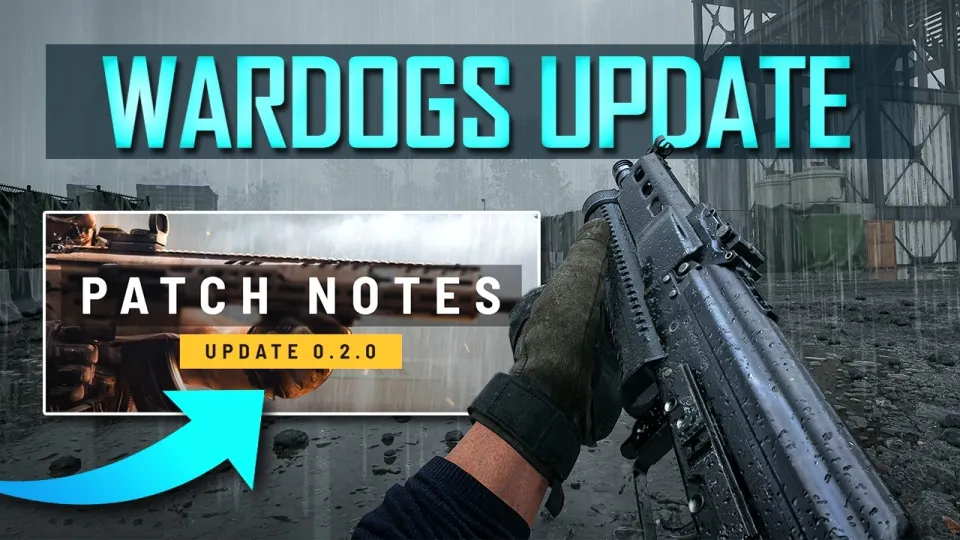
Video: WARDOGS New Season 2 Update ► EVERYTHING You Need To Know
Want articles like this for your own video to promote it on YouTube and Google? Order them through the Telegram bot @sat_sit_bot. Articles with your video embedded are written and posted by the bot itself — on popular topical sites (no ads). Free trial — 50 articles.
Wardogs Season 2 (update 0.2) is a better update for infantry players than for logistics mains, because the patch pushes almost every money-making activity except direct combat toward more grind. The update landed on October 14, 2026, and the full patch notes are on Steam, with GhostGaming's breakdown covering the numbers. If you want to watch the breakdown live or catch the follow-up streams, the channel's Twitch page is where the gameplay goes up first.
The core of the update is a rebalance of the economy: supply deliveries, FOB construction, helicopter flying and sniper play all pay less or cost more, while riflemen keep earning at roughly the same rate. Below is everything that matters, sorted by who it hurts.
What changed in the Wardogs Season 2 update for logistics players
Logistics got the biggest rework and the biggest complaints, because the supply economy now rewards volume over risk. A pallet delivered on a 10-streak pays $1,250 base plus a $2,500 bonus, and those streak values are calculated outside the combat zone, so a driver cannot stack the bonuses by pushing into hot areas. The intent is to make repeated round trips the main income source, but the practical result is that a single URAL run to top up a dry FOB pays far less than before, and the round-trip bonus for delivering players still has the old problem where stepping out of the vehicle for any reason cancels it.
The driver progression curve is also effectively unchanged in difficulty: the XP requirements still scale the same way, so the extra trips needed to match Season 1 earnings mean more hours behind the wheel for the same rank. For players who enjoyed reacting to a call for ammo and driving one truck into a fight, the incentive to do that is now close to zero.
FOB building costs and why base builders are struggling
FOB construction was nerfed across the board, so every part of a base now costs more relative to the supplies delivered. Builders report that reaching the same fortification level takes roughly three to four times the work, and that a FOB with enough supplies for several bases can still be overrun because walls go up too slowly. That combination is the real problem: it is not just that supplies are worth less, it is that the time-to-wall ratio got worse at exactly the moment logistics slowed down.
The practical consequence for squad leaders is that FOBs should be sited closer to supply sources and built in layers, with the first wall segment prioritized over decorative structures. If your team cannot keep two builders hammering while trucks cycle, the base will not finish before contact.
Weapon changes: sniper damage, the 0.50 cal nerf and optics
The sniper meta shifted because 0.50 cal damage was cut by 16%, which is enough that tier 2 armor can now survive a body shot from the end-game sniper rifle. The sniper hit zones on the X still refer to the head and neck area, so headshots remain lethal, but body-shot follow-ups are no longer a guaranteed kill against armored targets. Expect more two-tap engagements and more players running heavier armor into sniper lanes.
On the optics side, the patch keeps low-zoom, minimalistic sights locked behind late progression, which is the single most common complaint in the community. A simple uncluttered red dot is still a high-level unlock, and variable zoom scope keybinds were not addressed in this update. The SKS bipod also moved from $800 to $810, a change small enough to be a rounding error next to the other economy shifts.
Helicopters, the Gepard and the minigun Little Bird economy
Flying got more expensive in both directions: the minigun Little Bird costs more to buy and to arm, with a fully loaded build running around $14,000 with three flares, while a new anti-air vehicle, the Gepard, was added to punish helicopters that stay in the open. Landing XP was not increased to compensate, so pilots who lose a single airframe eat thousands of dollars for a mistake that infantry pay nothing for.
The math is unforgiving: to break even on a loaded minigun bird you need a sustained kill streak, and every flare you burn cuts into that margin. Players who already avoided the minigun variant because it was hard to recoup will likely skip it entirely in Season 2, at least until the Gepard population settles down and pilots learn the new threat ranges.
The Browning turret also makes low passes riskier, which pushes helicopter play toward standoff rocket runs and away from close air support. If you fly, budget for flares as a fixed cost, not an emergency expense.
Common player concerns about the Wardogs Season 2 economy
The most frequent worry is that logistics and FOB building become dead roles, because no one will drive for an hour and a half for less money than a rifleman earns in a firefight. That concern is legitimate on the current numbers, but the patch does not remove logistics: it makes it a volume job, where three or four short, safe trips beat one risky long run. The second worry is that the update mainly benefits infantry, which is accurate as a description of the direction, and whether it is good depends on whether you thought Season 1 rewarded driving over fighting. The third is helicopter viability, and the honest answer is that pilots are now a support asset with a real cost of failure rather than a self-funding kill machine.
A squad intent list was also added, which lets teams coordinate objectives on the map in a way that echoes the old Battlefield 2 commander system. It is a small quality-of-life feature, but it directly helps the logistics problem by making it clearer where supplies are actually needed.
All links from the GhostGaming breakdown
- GhostGaming on Twitch
- GhostGaming on Twitter
- GhostGaming Discord
- GhostGaming on TikTok
- Full Wardogs Season 2 patch notes on Steam
Summary
Wardogs Season 2 is a clear trade: infantry get a stable economy while logistics, FOB builders and helicopter pilots absorb the nerfs. The pallet streak bonus, the 16% 0.50 cal cut, the higher minigun Little Bird price and the new Gepard all point in the same direction, which is fewer passive incomes and more risk attached to expensive assets. If you main a truck or a helicopter, plan for more trips and fewer mistakes per life; if you main a rifle, this is your season. For the full breakdown with gameplay context, watch GhostGaming's video and follow the channel on Twitch for live testing of the new numbers.
Key takeaways
- Wardogs Season 2 (update 0.2) went live on October 14, 2026, and the full patch notes are published on Steam.
- Logistics payouts were reworked: a supply pallet at a 10-streak now pays $1,250 base plus a $2,500 bonus, with the streak numbers shown outside the combat zone.
- FOB building costs and every part of base construction were nerfed, so the same fortification now takes roughly three to four times the effort.
- The 0.50 cal damage was reduced by 16%, enough that tier 2 armor can survive a hit from the end-game sniper rifle to the body.
- The minigun Little Bird got more expensive to buy and fly while a new anti-air vehicle, the Gepard, was added to counter helicopters.
Questions & answers
How much does a supply pallet pay in Wardogs Season 2?
A pallet delivered on a 10-streak pays $1,250 base plus a $2,500 bonus. The streak values are calculated outside the combat zone, so pushing into a fight does not multiply the payout.
Is the minigun Little Bird still worth buying in Season 2?
It is much harder to justify. A fully loaded build costs around $14,000 with three flares, landing XP was not increased, and the new Gepard anti-air vehicle plus the Browning turret make low passes riskier. You need a long kill streak just to break even.
Does the 0.50 cal nerf change sniper fights?
Yes. Damage was cut by 16%, which means tier 2 armor can survive a body shot from the end-game sniper rifle. Head and neck hits are still lethal, so the nerf mainly punishes body-shot follow-ups.
Why are logistics players unhappy with the Season 2 update?
The payout structure now favors many short, safe trips over one risky run, and FOB construction costs were nerfed at the same time. Drivers earn less per delivery and builders need roughly three to four times the work for the same base.
Source: WARDOGS New Season 2 Update ► EVERYTHING You Need To Know · Markdown version